Workshop·Live, one to one·Two classes · two hours
The poetic image
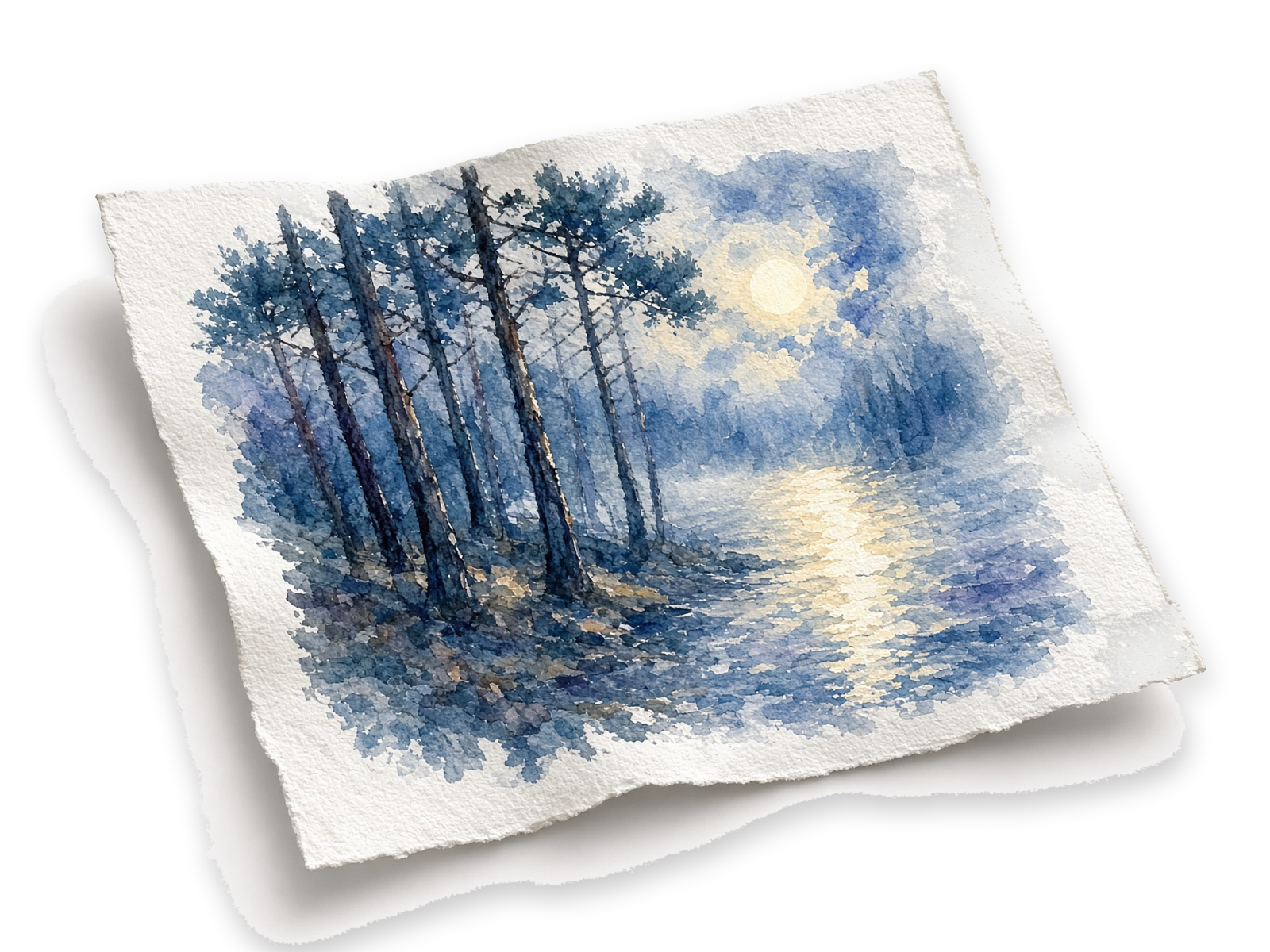
One live meeting, one to one. The time is arranged with you. A named feeling is not enough: the scene has to be filmable.
If it cannot be filmed, it is not yet an image.
Ground
Naming sadness, love, or beauty hands the reader a caption, not a scene. An image is what can be filmed.
Aim
- Take out the name of the feeling and put a scene.
- Build the image with an empirical ground, a feeling, a paradox, and coherence.
- Rewrite a passage of your own until it can be filmed.
It trains
See a scene, not a named feeling.
Contents
1The ground
1.1It can be seen
A concrete scene, seen or heard. Not the name of the feeling.
1.2Not a caption
“Sadness” or “beauty” hands the reader a label, not a place.
1.3Film it
If it cannot be filmed, it is not yet an image.
2Feeling and cut
2.1What moves
The feeling is in the scene, not in the explanation.
2.2The paradox
A norm the line cuts, so it is not only description.
2.3Both
A scene without a cut is a photo. A cut without a scene is an idea.
3Coherence
3.1The link
What is outside and what is inside have to be able to live in the same image.
3.2One passage
You rewrite a short one, not the whole poem.
3.3Read it
The reader has to see the scene without having it explained.
Questions
Is it the same as analogy?
No. An image builds a scene. An analogy joins two things that are not the same.
What do I need to know first?
Nothing. You start from a feeling you already named, or from something you saw.
Is it a video?
No. It is live, one to one. The time is arranged by email.
What if I don't think of myself as a poet?
You don't have to. The work is a text of yours. A short draft is enough. If there is no poem, one sentence is enough.
It is live, one to one, on Zoom. The time is arranged by email.
Next workshop: Figure and ground.
After one tool, the next step is the 15-minute call, or group mentorship. Book the call · See how to continue